What does grease actually do to a drain pipe?
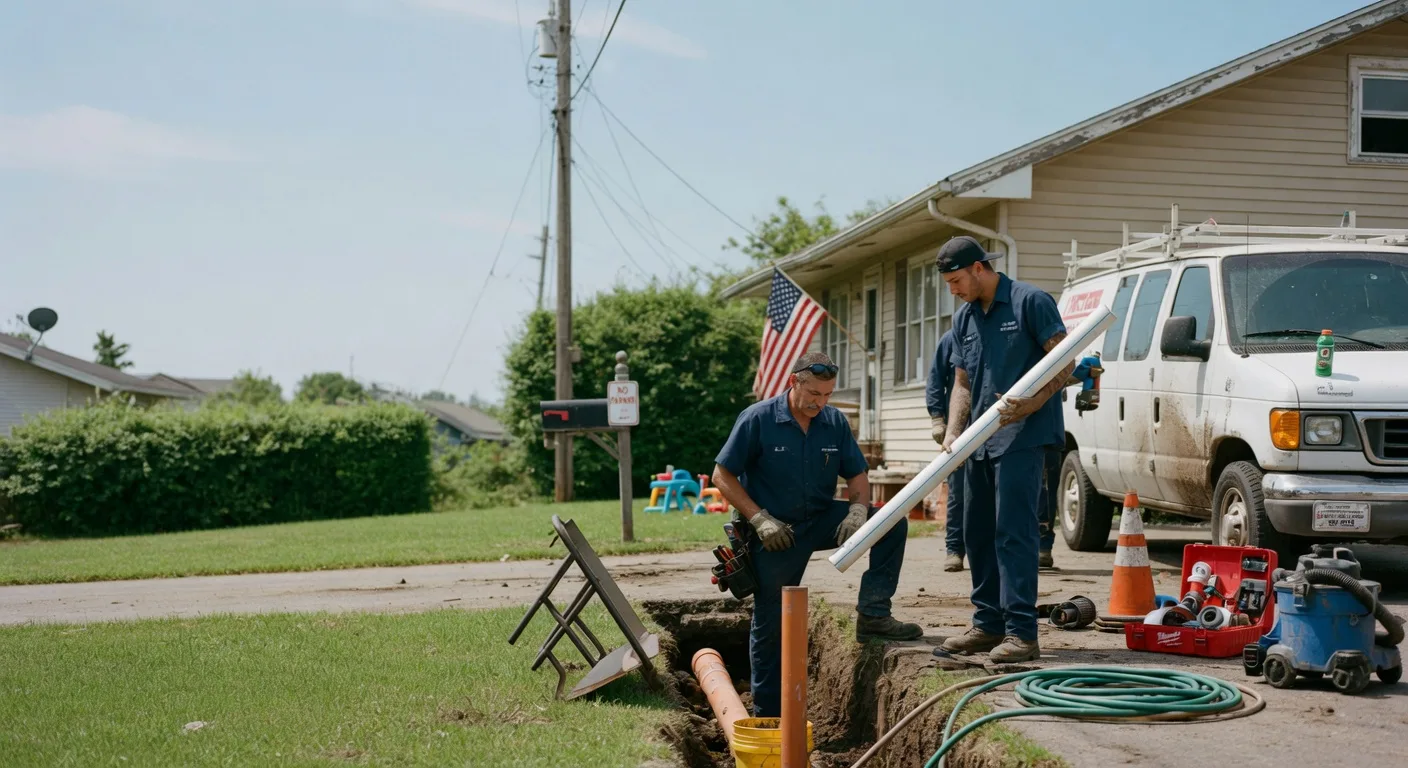
Grease leaves the sink as a liquid, and the pipe is where it stops being one. Warm fat cools on contact with the cold pipe wall and hardens into a waxy layer. That layer is slightly sticky, so it grabs coffee grounds, food scraps, and lint, and each meal adds another coat. Over weeks the opening shrinks like an artery, and water that used to flow freely starts to drain slowly and gurgle. Hot water does not fix this; it only carries the grease farther down the line, where it cools and sets again, sometimes in the main. That is why a kitchen sink that slows while every other fixture drains normally is nearly always grease in the branch line close to the trap. A cable machine cuts a channel through the buildup and often restores flow, but the coating stays on the pipe wall and narrows again within weeks. Hydro jetting sends high-pressure water around the whole interior and strips the grease off the pipe wall, which is why it is the usual answer for repeat kitchen clogs. Wiping pans with a paper towel and putting fat in the trash prevents most of it. Expert Plumbers Co connects homeowners with an independent local plumber who can tell whether a cable or a jetter fits the line. Access and the amount of buildup affect the job.
The place where most people go wrong is the hot water habit. Running hot water for a few seconds after washing dishes does not carry grease to the sewer, it only moves it down the line a few feet, where it cools and sets. A much better routine is to scrape plates into the trash, wipe greasy pans with a paper towel, and keep a jar for cooking oil that can go in the garbage once it is full. Dish soap makes grease look like it has dissolved, but it only breaks it into smaller droplets that still stick further along. Garbage disposals do not solve this either, since they chop food without removing the fat. In restaurants and busy households, a grease trap or interceptor may be present, and it needs regular emptying. If the sink has slowed repeatedly, mention that to the plumber, since a pattern points to a coating that needs scouring rather than another quick clear.
The toilet flushes slowly but never fully clogs. What is going on?
The toilet flushes, the bowl drops slowly, and it creeps back up before settling. It never fully clogs, so it is easy to ignore. Do not ignore it.
A slow flush means something is partly in the way. There are three common causes. First, the trap or the pipe just past it is narrowed by paper, wipes, or grease and soap scale on the pipe wall. Second, the vent stack on the roof is partly blocked, so air cannot follow the water down. You may hear gurgling or see the bowl bubble. Third, the branch line is bellied, or has roots at a joint, and water moves through it slowly.
Check one thing first: is it only this toilet, or are the tub, sink and other toilets slow too? One slow fixture points to that fixture's branch. Slow everywhere points to the main line or lateral, which is a different job with different equipment.
Safe homeowner check: use a plunger, stop flushing wipes, and watch whether it comes back. Stop running water and call now if other drains gurgle when you flush, water rises in a tub, or there is a sewage smell in the house.
A cable machine usually clears a single branch. Recurring slowness, roots or grease often call for hydro jetting, and a camera inspection shows which. Expert Plumbers Co is a referral service. Call (380) 262-9173 to be connected with a plumber in Mendota, VA for Drain Cleaning.
A slow flush that gets worse over a few weeks is a sign that the cause is growing, not stable. If the water is also making a gulp or a bubble in a nearby sink or tub when you flush, that points toward air being pulled through a trap, which is the vent stack problem. Check whether the slowness is worse during heavy rain or after the washing machine runs, because that tells the plumber whether the main line is filling up. Do not keep adding more water in the hope that the extra weight will push the blockage through, since it can drive waste up into the lowest opening. Tell the plumber if the toilet was recently moved, replaced or fitted with a water-saving model, because a low-flow toilet on an old line with little fall can leave solids behind. In older homes, the toilet branch is often a long run with a modest slope, which makes it more likely to hold debris.
Does hard water cause drain problems, or only water heater problems?
The bathroom sink used to run fine. Now it drains a little slower each month. That slow creep is the sign of scale, not a clog.
Hard water does more than coat a water heater. Minerals from the supply side leave a chalky layer inside a trap. In a bathroom line they bind with soap residue into a hard, grey film. The bore narrows a fraction at a time, so you notice a gradual slowdown rather than a sudden blockage.
Old cast iron is a different problem. Inside drain pipe that has been in the ground or a wall for decades, rust forms lumpy mounds called tubercles. These are not hard-water minerals. They are the pipe corroding from within, and they snag grease and paper.
The two tools do different work. A cable punches a hole through the build-up. Water drains again, but the scale stays on the wall and the line narrows again. Hydro jetting strips the wall back to the pipe surface.
Jetting old iron hard without looking first is a gamble, because thin, flaking pipe can fail under pressure. That is why a camera inspection comes first on old iron. It shows wall condition and cracks before anyone sets the pressure.
Safe homeowner check: find out whether one fixture is slow or every drain in the house is, then clean the visible stopper and trap.
Stop running water and call now if several drains slow together, or water backs up at a floor drain. One slow bathroom sink is usually a cable or trap job. A whole-house slowdown in old iron often needs a camera first and possibly jetting.
Expert Plumbers Co is a referral service. We connect you with an independent local plumber in Mendota, VA. Call (380) 262-9173.
A water softener changes the picture a little, and it is worth telling the plumber if you have one. Softened water leaves less mineral scale, but it can feel slippery and does not stop soap and hair from building up on the pipe wall. If your water is hard and you have no softener, the mineral film inside traps and short branch lines is the main cause of the slow creep. A simple habit helps: use a hair catcher in the tub and basin, and rinse the sink with hot tap water after use so soap does not cool and settle on the wall. Do not rely on vinegar or store-bought descalers to clear a drain, as they only treat the surface. In newer homes with plastic pipe, scale is mostly a trap and fixture issue. In older homes with iron or galvanized pipe, scale and corrosion together can narrow a line enough that replacing a section is more sensible than repeated cleaning.
Water shows up around the base of the toilet after flushing. Is that the drain or the seal?
"There is water around the base of my toilet after I flush." Water at the floor can come from three places, and only one of them is the drain.
The most common cause is a failed seal. A toilet sits on a wax ring or a rubber seal that joins it to the flange, the fitting on the floor drain. If the ring is crushed or the toilet rocks, water escapes at the base during the flush. A loose bolt, a cracked flange or a flange set too low can do the same.
A drain problem is the other case. If the toilet is partly blocked, the flush water slows and rises, and it can push out at a weak seal. Grease build-up, a bellied line holding water, or root intrusion at a clay joint can all do this.
Here is the test. If only this toilet leaks and every other drain runs clean, think seal or flange. If the bowl drains slowly, gurgles, or the tub and floor drain are also slow, think drain. If every drain in the house is backing up, the main line or sewer lateral is involved.
Safe homeowner check: Flush and watch where the first drop appears. Press the toilet by hand to see if it rocks. Check the supply line and shutoff valve for drips. Look at the bowl: does it drain quickly or slowly? Do not over-tighten the closet bolts, because porcelain cracks.
Stop running water and call now if the water on the floor smells of sewage, the toilet will not drain or the bowl rises, other fixtures are backing up, or water is coming through a ceiling below.
A cable machine is enough for a toilet blocked by a clog close to the bowl. A seal or flange job is a reset, not a drain job: the toilet is lifted and a new ring and fittings go in. If the drain keeps slowing, a camera inspection can show roots or a belly, and hydro jetting is used for grease or scale coating the pipe wall.
Expert Plumbers Co is a referral service. We connect you with an independent local plumber in Mendota, VA. Call (380) 262-9173.
Ask the plumber to say whether the problem was the seal, the flange or the drain, and what they checked. Ask if the subfloor is wet or soft, since that can widen the work. Cost depends on access, the parts or materials needed, how much has to be opened up or removed, and any permit or code requirement.
We live in a manufactured home. Why do the drains under the floor keep clogging?
You live in a manufactured home, and the drains keep clogging. A sink runs slow, the tub gurgles, or the toilet backs up every few months. The cause is usually under the floor, where you cannot see it.
Drain lines in a manufactured home run through the belly wrap, between the floor framing and the ground. The runs are long and shallow, with very little fall, so water and solids move slowly and grease, soap and paper settle. Over time the hangers that hold the pipe can fail and the line sags. A sagging section becomes a bellied line that holds water and collects debris. Lightweight plastic pipe can also crack or pull apart at joints when the ground shifts.
Cold weather adds a problem. Pipes under the floor can freeze, and a frozen drain looks like a clog until it thaws. Roots can also reach the outside section where the home ties into the sewer.
One slow fixture is usually a branch or trap problem near that fixture. If sinks, tub, toilet and washer all slow down together, or water comes up in the lowest fixture, the main run under the home or the sewer connection is the likely spot.
Safe homeowner check: Run each fixture one at a time and note which are slow. Look for a cleanout outside near the home and see whether it holds water, without opening it under pressure. Do not crawl under the home if it is wet or smells of sewage.
Stop running water and call now if sewage is coming up inside, if water drips from the belly wrap, if the floor feels soft, or if the smell of sewage is strong under or around the home.
A cable machine is often enough for a soft clog in one branch. Hydro jetting is the better tool for build-up on the wall of a long, shallow run. A camera inspection is the right step when clogs keep returning, because it can show a sag, a cracked joint or a separated pipe.
Expert Plumbers Co is a referral service. We connect you with an independent local plumber in Mendota, VA. Call (380) 262-9173.
Ask the plumber how they will reach the pipe and whether the belly wrap has to be opened and resealed. The scope depends on access under the home, how much belly board or insulation comes off, the pipe material, whether hangers need replacing to restore the slope, and any permit or code requirement.